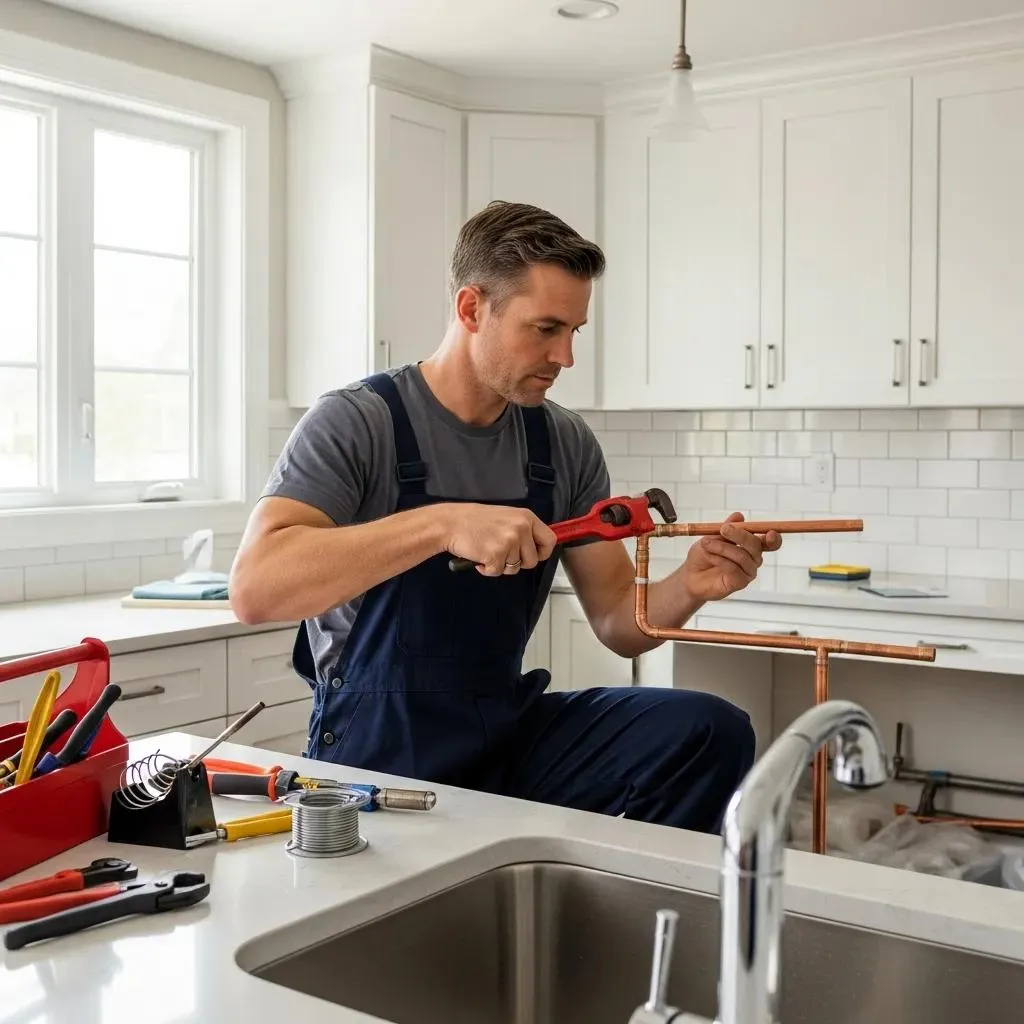
Professional New Plumbing Installations Melbourne
New Plumbing Installations in Melbourne — A Practical Guide for Homes and Businesses

New plumbing installations set the backbone for safe, efficient buildings by putting in the pipes, fixtures, gas lines and drainage that bring water in and carry waste away. This guide walks through what a new plumbing install looks like, why using professionals matters for compliance and durability, and how residential and commercial projects in Melbourne differ. You’ll find a clear sequence of design, rough‑in, fit‑off and certification steps, the main cost drivers to expect, and how Victorian standards affect product and layout choices. There are also practical tips on picking fixtures, preparing for quotes and coordinating with builders and hydraulic designers to avoid rework. To show how this works in practice, we explain how J.O. Plumbing supports new installs with licensed teams, a written Quality Assurance Guarantee and customer‑friendly payment options, while keeping the focus on meeting technical and regulatory requirements.
What Are New Plumbing Installations and Why They Matter in Melbourne
New plumbing installations cover the full build of a building’s water supply, drainage, sanitary and gas systems — from hydraulic design and rough‑ins to fit‑off and final testing. They create planned pathways for supply and waste that protect public health, save water and energy, and satisfy building regulations so occupants get reliable service for years. In Melbourne’s mixed climate and tight urban sites, professionally delivered installs reduce the chance of leaks, council non‑compliance and knock‑on delays for other trades. Below we break down a typical residential new‑home plumbing package so you can see how those works slot into the construction program.
Local trends also influence new plumbing: higher expectations for water‑efficient fixtures, growing use of heat‑pump and solar hot water, and stricter backflow controls on commercial sites. Early design choices — pipe routes, gas runs and drainage falls — determine cost and long‑term maintainability, so experienced installers who coordinate inspections and trade sequencing will keep timetables on track. As a local example, J.O. Plumbing works across Melbourne’s eastern and south‑eastern suburbs and offers same‑day service, 24/7 emergency support and a written Quality Assurance Guarantee to back new installations. Understanding the difference between residential and commercial scopes helps explain why projects need different levels of specification and oversight.
What Does New Home Plumbing in Melbourne Include?
New home plumbing usually includes hydraulic design, the rough‑in pipework and stub‑outs for kitchens, bathrooms and laundries, hot water system connections, gas supply where required, plus stormwater and sewer connections. Rough‑in is the concealed stage where pipework and service positions are set for other trades; fit‑off installs the visible fixtures and completes commissioning and testing before handover. Coordination with the builder and the electrician at both rough‑in and fit‑off prevents clashes with cabinetry and ensures appliance clearances meet manufacturer and regulatory requirements. Homeowners should expect staged inspections, final pressure and leak tests, and compliance paperwork at completion.
Fixture choices — especially water efficiency and hot water type — affect running costs and comfort. Selecting WELS‑rated taps and an appropriately sized hot water system at design stage reduces the chance of expensive retrofits and supports Melbourne’s sustainability goals. Preparing a clear fixture schedule before contractors arrive keeps quotes consistent and makes comparisons meaningful, which leads into how commercial projects add extra systems and obligations.
How Do Commercial Plumbing Installations Differ in Melbourne?

Commercial installs are generally more complex: specialised fixtures, higher flow rates and additional regulatory controls like backflow prevention, grease arrestors and industrial drainage. These jobs often need bespoke hydraulic design, coordination with mechanical services and project managers, tenant‑fit staging and stricter commissioning to meet health and council rules. Examples include commercial kitchens that require large grease traps and controlled discharges, multi‑unit developments with metering strategies, and office fit‑outs that demand engineered drainage falls and larger hot water systems. Because commercial work affects occupier health and business continuity, clear specifications, commissioning reports and maintenance plans are standard expectations.
Hiring a contractor with commercial experience lowers the chance of rework and ensures specialist components are sized and certified before operation. The next section shows how professional installers typically manage a new plumbing project from design to certification, aligning tasks with inspection milestones and builder timelines.
How J.O. Plumbing Delivers New Plumbing Installations in Melbourne
A proper new plumbing install follows a clear sequence: consultation and hydraulic design, rough‑in, inspections, fit‑off, commissioning and certification. J.O. Plumbing aligns its offering with these stages while prioritising communication and compliance. Our licensed local plumbers coordinate with builders and trades, can provide same‑day service where schedules allow, and back workmanship with a written Quality Assurance Guarantee. We also offer 24/7 emergency response for unexpected issues and a 0% interest payment plan to help with construction cashflow — all aimed at keeping builds moving and meeting regulatory checkpoints.
To make this concrete, here are the core capabilities and value points J.O. Plumbing brings to new‑installation projects.
- Licensed local plumbers who coordinate directly with builders and trades on site.
- Same‑day service to help resolve tight scheduling during fit‑off phases.
- A written Quality Assurance Guarantee that documents workmanship commitments.
- 0% interest payment plans to assist with project cashflow management.
These features support the technical delivery; the section below explains the typical installation steps and where inspections and documentation fit in.
Key Steps in a New Plumbing Installation
A standard new plumbing project moves through consultation, hydraulic design, rough‑in, inspections, fit‑off, commissioning and certification, with each stage producing specific deliverables. During consultation and design, layouts and fixture schedules are finalised and hydraulic calculations completed to ensure correct flows and avoid late changes. Rough‑in positions pipes and services; inspections verify drainage falls and membrane penetrations before slabs or walls are closed. Fit‑off installs fixtures and connects appliances; final commissioning includes pressure and leak tests, backflow tests where needed, and the issue of certification and compliance documents at handover.
This staged approach gives traceability and helps project managers plan inspections and milestone payments around physical work.
- Consultation and hydraulic design documentation prepared for approval.
- Rough‑in pipework and service positions installed and inspected.
- Fit‑off of fixtures and appliances followed by commissioning tests.
- Certification and documentation provided at handover for compliance records.
The next section covers common fixtures and systems and how to compare them when specifying your build.
Which Plumbing Fixtures and Systems Are Installed?
New installs cover toilets, basin and sink mixers, showers, kitchen fittings, laundry outlets, hot water systems, gas appliances, drainage runs and stormwater systems. Selection usually depends on water‑efficiency ratings, durability, brand support and compliance with Victorian requirements. Installation notes focus on access for maintenance and compatibility with cabinets and appliances. Gas work and servicing must be done by licensed gasfitters and correctly certified — essential for safety and passing inspections. The table below summarises key attributes and installation considerations for common fixtures.
| Fixture Type | Key Attribute | Installation Notes |
|---|---|---|
| Toilet | Water efficiency / WELS rating | Install to manufacturer’s rough‑in; consider dual‑flush to save water |
| Shower | Flow rate and mixer type | Coordinate piping with waterproofing and allow service access |
| Basin / Kitchen Tap | WELS rating and spout reach | Check bench clearance and mounting type at fit‑off |
| Hot Water System | Type (heat‑pump, solar, electric) | Size to household demand and allow space for maintenance |
When choosing fixtures for new builds, balance efficiency, upfront cost and long‑term serviceability. The section that follows covers typical costs and payment options so you can plan a realistic budget before requesting quotes.
Typical Costs and Payment Options for New Plumbing Installs in Melbourne
Prices vary because cost depends on project scale, fixture spec, site access and whether gas or complex drainage is needed. A transparent, itemised quote after a site visit is the standard way to estimate. Major cost drivers include property size and number of wet areas, fixture quality, specialised gas or drainage work, and any unexpected site conditions. Contractors often provide staged quotes separating design/documentation fees, rough‑in labour and materials, fit‑off labour and fixtures, plus specialised testing or backflow certification. J.O. Plumbing can also offer a 0% interest payment plan to spread payments — contact us to discuss eligibility and terms.
The table below maps common cost drivers to how they affect pricing and offers notes to help prepare for estimates.
| Cost Driver | How It Influences Cost | Typical Notes |
|---|---|---|
| Property size | More pipe length and more fixtures increase cost | Multi‑bathroom homes need more complex drainage planning |
| Fixture quality | Premium brands raise material costs | High‑efficiency fixtures cost more up front but cut running costs |
| Gas work | Requires licensed gasfitter and certification | Adds specialised labour and inspection items |
| Site access | Restricted access raises labour time | Trenches, multi‑storey sites or tight spaces can add cost |
Knowing these drivers helps you ask the right questions during quoting and reduces surprises on site. Practical steps owners and builders can take to keep quotes comparable and projects predictable are listed below.
- Prepare a detailed fixture schedule so contractors quote the same scope.
- Allow for staged inspections and include those costs in your budget.
- Confirm whether gas appliance installs are needed and note certification requirements.
- Discuss payment options and financing early to align cashflow with milestones.
Below we explain the 0% interest plan in broad terms and encourage direct discussion for eligibility and terms.
What Affects New Home Plumbing Costs in Melbourne?
Final pricing reflects several linked variables: number and type of wet areas, required approvals, soil and site conditions, and complexity of gas or solar hot water installations. Designer tapware or integrated waste systems increase material budgets and often need more precise fit‑off, which raises labour. Constraints like poor access, deep excavations or relocating services add time and specialist trades, particularly for drainage and stormwater connections. To control cost risk, schedule an early site assessment, finalise your fixture list and pick products within a clear budget band before contractors provide itemised quotes.
These steps lower the chance of variations and let contractors give more reliable timelines and pricing. The next part explains how a 0% interest payment plan can help manage project cashflow without changing the technical scope.
How the 0% Interest Payment Plan Works with J.O. Plumbing
Our 0% interest payment plan lets clients spread the cost of an install over an agreed period without interest charges, making larger projects more accessible while maintaining quality. The plan doesn’t change the work scope — it provides a staged payment schedule tied to milestones like deposit, rough‑in completion and final handover. Exact eligibility, application steps and terms vary and must be agreed before work starts, so request a detailed itemised quote and confirm how the plan integrates with staged invoicing to keep everything transparent.
Payment options like this give clients flexibility while preserving compliance and workmanship standards. The next section looks at the regulatory landscape in Victoria and the key compliance points new installs must meet.
How Melbourne Plumbing Regulations and Compliance Affect New Installs

New plumbing in Melbourne must follow Victorian Building Authority guidance and Australian standards such as AS/NZS 3500, which set performance requirements for water supply, sanitary plumbing and drainage. Compliance shapes design decisions, materials, testing regimes and paperwork — for example, backflow prevention devices, correct pipe gradients and certified gas connections are mandatory where applicable. Using licensed plumbers and obtaining certificates at inspection stages ensures installations meet statutory obligations and that owners receive the necessary compliance documents at handover. Project programs should allow time for statutory inspections and rectifications if work fails an initial check.
The table below links the main regulatory bodies and standards to expected outcomes so decision‑makers and installers can see what’s required.
| Regulatory Entity / Requirement | Regulatory Attribute | Requirement / Outcome |
|---|---|---|
| Victorian Building Authority (VBA) | Oversight and guidance | Ensures installers follow state building regulations and certification processes |
| AS/NZS 3500 | Plumbing and drainage standard | Sets technical specifications for pipework, materials and testing |
| Licensing | Qualified installer requirement | Work must be completed by licensed plumbers/gasfitters for compliance and certification |
| Inspections | Stage‑based checks | Inspections at rough‑in and final stages validate compliance and enable certification |
Knowing these links helps clients plan inspections and pick compliant products during design. The short checklist below summarises practical compliance steps to expect on new plumbing projects.
- Engage licensed plumbers and ask for proof of qualifications before contracting.
- Arrange staged inspections at rough‑in and final fit‑off to avoid closures without certification.
- Specify compliance with AS/NZS 3500 in contracts and fixture schedules.
- Ensure backflow prevention and gas safety certificates are included where required.
Following these measures reduces the risk of non‑compliance and protects warranty and insurance positions. The next subsection outlines key VBA standards and documentation expectations in more detail.
What Are the Victorian Building Authority Standards for Plumbing?
The Victorian Building Authority sets regulatory oversight and references standards such as AS/NZS 3500 to define technical and procedural requirements for new plumbing works — covering materials, installation practice, inspection protocols and certification. These standards require licensed tradespeople for certain tasks, mandate backflow prevention where needed and set testing criteria for drainage and pressure systems before certification. Compliance reports, certificates of conformity and test records are normally required at handover to prove installations meet state and national standards. Understanding these requirements early avoids costly rework and helps coordinate inspections with local council processes.
Staying aligned with VBA expectations reduces risk at handover and protects property saleability and insurability.
Why Licensing and Compliance Matter for New Plumbing Installs
Licensing and compliance are essential because unlicensed or non‑compliant work can create safety hazards, void insurance and trigger expensive rectification orders. Licensed installers provide proof of competency, and certification shows work meets technical and legal standards — important for occupant safety and regulatory conformity. Compliance also affects warranties and consumer protections: certified work is easier to support under written guarantees and via insurers. Proper documentation protects future property transactions, since non‑compliant work can delay sales or reduce value.
Clients should prioritise licensed contractors and request copies of certification and test reports at handover to avoid downstream liabilities. With regulation covered, the next section lists the residential and commercial services experienced installers typically provide.
Residential and Commercial New Plumbing Services from J.O. Plumbing in Melbourne
J.O. Plumbing delivers a range of new‑installation services for residential builds and commercial fit‑outs, including rough‑in and fit‑off, hot water system installs, gas appliance connections and commercial fit‑out plumbing. Our approach focuses on licensed workmanship, coordination with builders and multi‑trade teams, and client‑friendly options like a written Quality Assurance Guarantee and payment plans. For homes, we commonly supply and install toilets, baths, showers and hot water systems; for commercial projects we provide backflow prevention, grease trap installs and large‑scale drainage design. The lists below outline typical residential and commercial offerings to help owners and project managers scope work.
Residential New Plumbing Services
Residential new‑build services include rough‑ins, fixture installation, hot water system connections, gas appliance installs and stormwater/drainage tie‑ins to council connections. These services ensure reliable supply and waste routing, correct appliance hookups and water‑efficiency measures such as using WELS‑rated fixtures to lower bills. Close coordination with builders during rough‑in ensures fixture positions match cabinetry and finishes; fit‑off work includes pressure testing and commissioning before handover. Homeowners should prepare a fixture schedule and confirm hot water sizing to get accurate, comparable quotes.
Picking the right installer and agreeing staged inspection plans helps create a smooth transition to fit‑out and occupancy.
Commercial New Plumbing Solutions
Commercial plumbing covers fit‑out plumbing for retail and offices, multi‑unit development coordination, commercial drainage and wastewater management, and installation of backflow prevention and grease traps. These projects need larger capacity systems, compliance with public health and council rules, and close coordination with project managers to align building services and occupancy plans. Commercial fit‑outs often require engineered hydraulic drawings, staged testing of grease traps or mechanical systems, and clear maintenance pathways for tenants or facilities managers. Hiring contractors experienced in commercial compliance reduces administrative burden and helps installations pass inspections the first time.
Well‑documented commercial installs also protect occupiers and landlords by clarifying maintenance responsibilities and compliance obligations.
Why Choose J.O. Plumbing for New Plumbing Installations in Melbourne?
Choosing a local, licensed installer like J.O. Plumbing brings practical benefits: knowledge of eastern and south‑eastern Melbourne council requirements, same‑day service for scheduling issues, and a written Quality Assurance Guarantee that underpins workmanship. Local teams respond faster for site coordination, understand common local site conditions and work with builders to sequence inspections efficiently to avoid delays. J.O. Plumbing also offers 24/7 emergency support to handle urgent site problems and a 0% interest payment plan to ease upfront cashflow during construction. Together, these elements combine technical assurance with customer protections that help projects stay on schedule and meet regulatory standards.
Key customer advantages when you engage a qualified local installer are summarised below.
- Local expertise ensures designs and installs meet regional council and site expectations.
- Same‑day service and 24/7 emergency plumbing reduce project downtime and disruption.
- A written Quality Assurance Guarantee gives documented confidence in workmanship.
- Flexible payment options, including a 0% interest plan, help manage project cashflow.
These benefits sit alongside robust technical delivery and compliance to protect your investment and timeline. The final subsections explain how guarantees work and how local capabilities support clients in both urgent and planned situations.
What Guarantees and Customer Policies Do We Offer?
A written Quality Assurance Guarantee sets out our commitment to workmanship and provides a clear route for remedies if issues arise after installation. J.O. Plumbing highlights this guarantee as part of our service. Guarantees commonly cover workmanship defects and are backed by certified plumbers who follow regulatory standards. Customers should ask for the guarantee in writing, clarify its scope and claim process before work starts, and keep compliance certificates at handover to support any future claims. Clear documentation and prompt communication are the backbone of how guarantees deliver value.
Having written guarantee terms removes ambiguity and helps clients understand their recourse if defects occur — and local teams can respond quickly to warranty requests.
How Our Local Knowledge and 24/7 Service Support Clients
Local knowledge means we understand common site conditions and council expectations across eastern and south‑eastern Melbourne, which helps reduce planning delays and keeps inspections aligned. Same‑day response and 24/7 emergency availability let us handle urgent issues that might otherwise stop work or damage finished areas, protecting schedules and budgets. Polite, qualified plumbers who know local builders’ sequencing coordinate smoothly on site, cut clashes and speed handovers. For clients, this responsiveness and local know‑how mean fewer disruptions and more predictable outcomes during both rough‑in and fit‑off.
If you’re preparing a new build or fit‑out, discuss staging, inspections and payment options with your installer early to set clear expectations and secure the documentation you’ll need for certification and handover.
Frequently Asked Questions
1. What are the benefits of hiring a licensed plumber for new installations?
Hiring a licensed plumber means the work is done to regulatory standards and safety requirements. Licensed tradespeople have the training and experience to handle complex systems, reducing the risk of costly mistakes and ensuring your install passes inspections. You also get the security of warranties and proper certification, and licensed plumbers will recommend modern, efficient products that improve longevity and performance.
2. How can I prepare for a plumbing installation project?
Start with a detailed fixture schedule listing taps, toilets and appliances so quotes are apples‑to‑apples. Set a budget and talk financing early, then coordinate with your builder and other trades to line up schedules. Make sure you understand inspection milestones and allow time in the program for statutory checks. Clear planning upfront keeps costs predictable and avoids unnecessary delays.
3. What should I expect during the inspection phases of plumbing installations?
Inspections happen at key stages, typically after rough‑in and at final fit‑off. Inspectors check drainage falls, pipework penetrations, fixture positions and compliance with standards. It’s helpful to be on site or available to address any queries quickly. Passing inspections leads to certification, which you’ll need for compliance and future property transactions.
4. Are there specific plumbing regulations I should be aware of in Melbourne?
Yes — installs must comply with Victorian Building Authority requirements and Australian standards like AS/NZS 3500. These rules cover materials, installation practices and testing protocols. Key points include using licensed plumbers, fitting backflow prevention where required and obtaining compliance certificates. Knowing these rules early helps avoid hold‑ups and ensures your project meets legal obligations.
5. How do I choose the right fixtures for my plumbing installation?
Choose fixtures by efficiency, durability and compliance. Look for strong WELS ratings to save water and running costs, and check that the fixture fits your cabinetry and plumbing layout. Research brands, compare warranties and ask your plumber about long‑term servicing. The right balance of price, efficiency and serviceability will give the best outcome for your build.
6. What are the common challenges faced during plumbing installations?
Typical challenges are difficult site access, unexpected ground or service conditions, and coordinating multiple trades. Restricted access increases labour time and costs, while unforeseen issues like unstable soil or service relocations can complicate drainage work. Good communication and early planning with your plumber and builder will reduce these risks and keep the project on track.
7. How can I ensure the longevity of my new plumbing system?
To maximise longevity, use quality materials and a licensed installer, schedule regular maintenance and check for leaks or drainage issues. Water‑efficient fixtures reduce wear on the system, and periodic inspections by a licensed plumber will catch problems early. These practices keep your plumbing reliable and extend its useful life.